How to Draw 34 Door on Floor Plans
What is a floor plan?
A floor plan is a second drawing to scale of the within of a edifice. It is a horizontal cutting of the building at a acme of iv anxiety from the floor.
The elements that can be shown in a floor plan are the walls, the partitions, the doors, the windows, the stairs, the furniture, and more than.
Different views in architecture
A plan view is simply i of the unlike views of a building nosotros see in compages. In that location are likewise elevation views, section views, and 3D views. These are some example of different view nosotros can have:
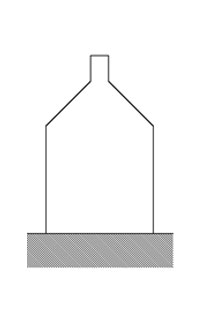
Side Acme
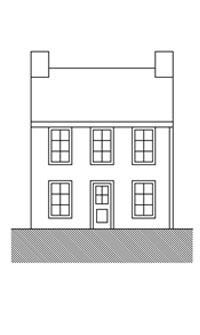
Front end Elevation
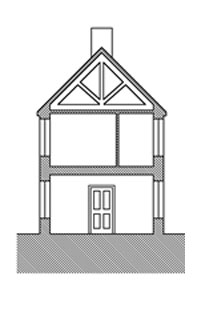
Section AA
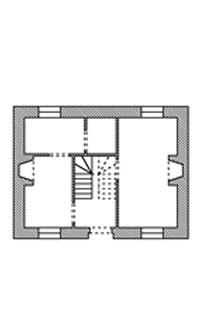
Floor Programme
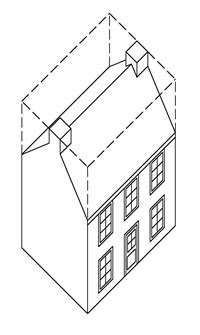
Axonometric
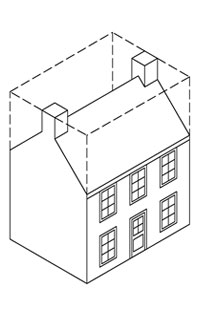
Isometric
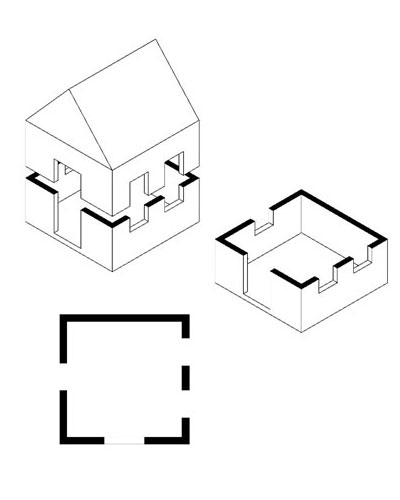
Plan view
A plan view is a horizontal 2D view of a building. The most common programme view drawing is a flooring program, only in that location are also reflected ceiling plans, details programme view, etc.
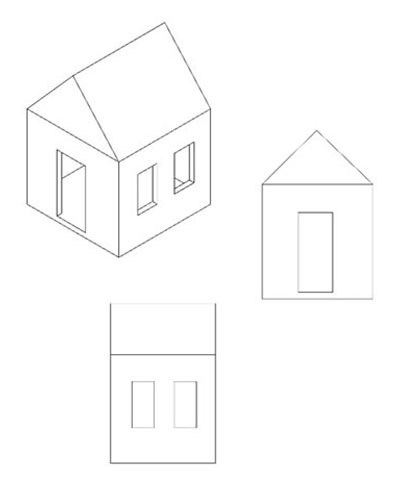
Top view
An elevation view is a second view of one of the sides of a building.
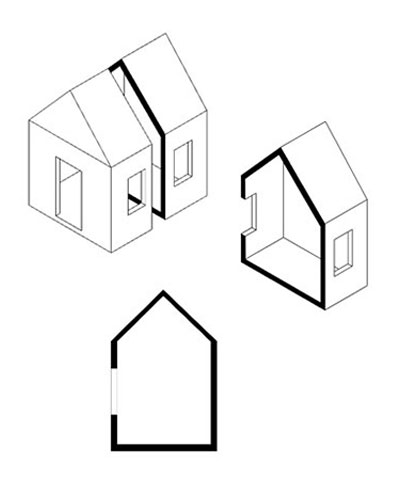
Section view
A section view is 'cutting' in the building (vertically) and looking at the inside.
Even for a floor plan, information technology is useful to call back about the department view and the pinnacle view. Some elements are cutting through, like in section, and some elements are seen in 2D from an outside point of view, similar in elevations.
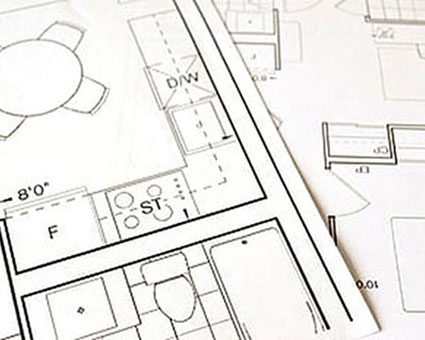
Line Weight
In architecture floor plans, there are different line thicknesses used for dissimilar elements. This is called line weights.
This is to make the plan easier to sympathize and help them make the link between the 2d and the 3D.
Every object drawn in a floor plan can exist separated into 3 categories:
- The objects below 4 anxiety
- The objects 'cut' at 4 anxiety
- The objects higher up 4 anxiety
Depending on the category to which the objects belong, information technology volition non be represented with the aforementioned line weight.
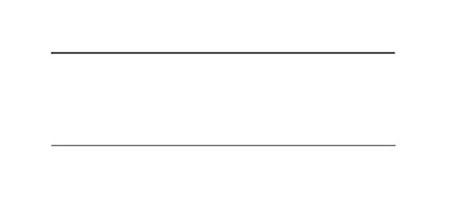
The objects below 4 feet
The objects beneath iv anxiety oft include the floor itself, front porches, decks, balconies, banisters, walls not reaching the ceiling, stairs going down, the lower steps of stairs going up, countertops, and other furniture.
These objects are seen from above, so their representation is only the way they look on the top. We ordinarily use continuous fine or medium lines to represent them.
Sometimes, the closer the objects are to four feet, the heavier the lines can be.
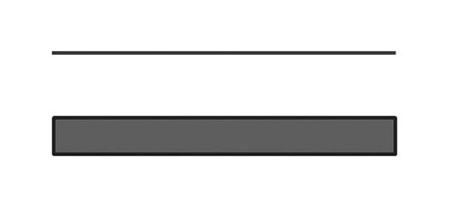
The objects 'cut' at 4 feet
The objects 'cut' at 4 feet will always be represented with heavier lines. They often include outside walls, interior walls, the glazing and frame of windows, columns, etc.
To bespeak that they are cut trough, a lot of these objects will exist poached (shaded in black). This includes the principal elements of floorplans, like the exterior walls, the partitions, and structural elements. Doors and windows will non be poached.
The objects in a higher place 4 feet
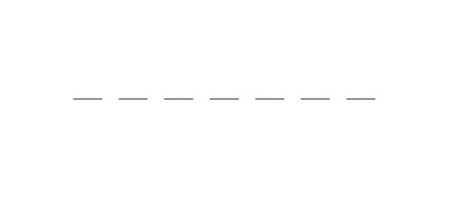
The object above 4 feet often includes the college steps of stairs going upwardly, ceiling features (Ex: opening in the flooring above or cathedral ceilings), or upper cabinets.
Those objects are considered "hidden" in the floor plan considering you would not encounter them if y'all look downwardly at 4 feet. And then, to draw them, we utilise fine dashed lines.
Other uses of line weights
Besides, unlike line weights can be used for graphic reasons. An object that as a lot of details in a pocket-sized corporeality of space volition have thinner lines to make it easier to empathize. It can also exist used to hierarchize the elements. For case, less important ones, like floor finishes, volition exist in thinner lines to draw attention to the main elements.
The dashed line is as well used to represent whatsoever hidden object even if information technology is not above four anxiety. For example, in stairs, the riser volition be in dashed lines, because they are subconscious past the tread and the nosing. Also, the part of the dishwasher that is under the countertop will be in dashed lines.
Recap
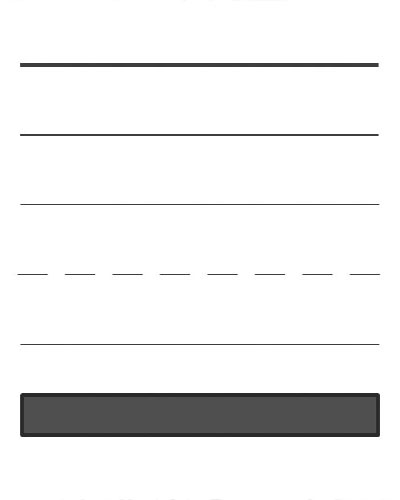
Big: cutting through architectural elements, such equally interior and outside walls
Medium: doors, windows, stairs, flooring limits, countertop and other architectural elements seen from above
Thin: furniture, appliances, and symbols
Thin (dashed): hidden objects, ceiling features, risers (stairs), and more.
Extra thin: materials (floors) and other surface features
Elements are filled with black when they are cut through. In a floorplan, it is mostly walls or columns.
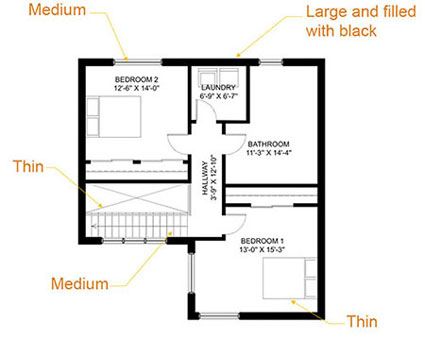
Overall view
This is an overall view of the use of weight line.
Exceptions
The 4 feet rule is almost ever followed just does non apply all the time. For case:
In a basement, we often meet windows that are only on the upper part of the wall. All the same, if we follow the 4 feet rule, those windows will non appear in whatever floor plan. Considering they are a very of import element of the building, nosotros can brand the conclusion to still evidence them as if they were regular windows.
Split levels. They are represented on the flooring plan of the closest level. There is no distinction between the mode split levels and the rest of the level are drawn. The iv feet rule is ignored considering the representation of the split up level would exist besides hard to sympathize.
Some furnitures are fatigued as if they were seen from above even if they are cut through, like the fridge, because representing the inside of a refrigerator would add not any helpful particular. Notwithstanding, nosotros tend to show the inside of custom or integrated piece of furniture, similar pantries.
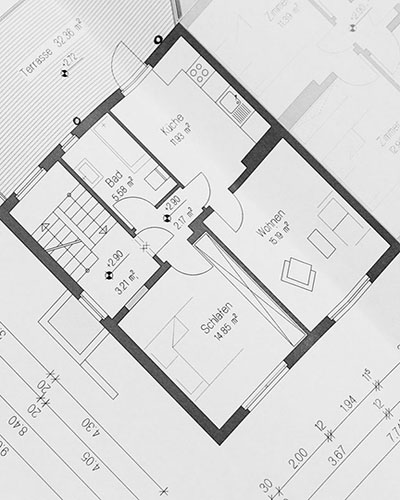
What parts of the building are represented?
Unremarkably, in a floor plan, everything is shown. This includes solariums, front porches, decks, etc. Even so, the interior infinite is always the most of import part to represent if it is not possible to draw the exterior spaces.
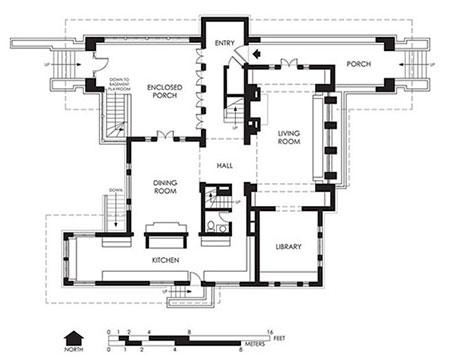
Exterior spaces
The exterior elements volition but be fatigued in the level they are in.
For instance, on the ground flooring, the deck and the forepart porch are drawn, likewise as the outside stairs and the banisters. However, nosotros do not come across the pavement on the ground considering information technology is not considered to be at the aforementioned level.
For the second flooring, we will not encounter the deck or the front porch because they are a level below. However, if the second floor has a balustrade, we will see it.
In the basement, null from the exterior is usually shown considering information technology is merely soil all around the foundation walls.
Baseline of the plan
The front door is by and large aligned towards the lower part of the programme.
All the floor plans of the same building need to be oriented the same way. Also, if you put them on top of the other, you should be able to make them fit with each other.
Exterior walls
At that place are no standard sizes for exterior walls because there are a lot of possible assemblies.
Walls tend to be thicker in parts of the world that are cold in the wintertime and crave insulation.
Some other element that makes a lot of difference in the thickness of the wall is the siding. Masonry walls volition be thicker than lightweight sidings walls.
Thicker sidings: Masonry like bricks and stones (almost of this type of siding is more or less around 3 ½'' thick)
Slimer sidings: Forest, aluminum, fiber cement, vinyl, stucco, etc. (the siding can exist equally slim as ¾'')
Also, non all walls are synthetic the same style. A house congenital in the 1920s volition not have the same wall thickness because information technology volition not utilize the same structure methods we apply today.
The blazon of construction also has an influence on the thickness. Most houses have a wood structure, only commercial buildings can have a steel or physical structure.
The walls in the basement are thicker than other walls because they are foundation walls and fabricated of concrete.
Usually, the outline of the exterior walls will have the simplest shape possible. For example, a lot of bungalows accept a rectangular shape. There can be more features from the inside of the wall but unremarkably, the exterior walls will be mostly flat.
Partitions
Interior walls are called partitions.
The most common thickness for partitions nowadays is iv ½''. They are made with 2x4 (which are 3 ½'' thick) and a gypsum lath ½'' on each side.
Some partitions tin be thicker. For instance, if in that location is plumbing going through the partition, the 2x4 are sometimes replaced by 2x6, which makes a 6 ½'' partition.
Partitions that need to be soundproofed or fire-resistant are also frequently thicker. For instance, the partitions separating condos or some partitions in commercial or institutional buildings.
Bearing walls can also be thicker.
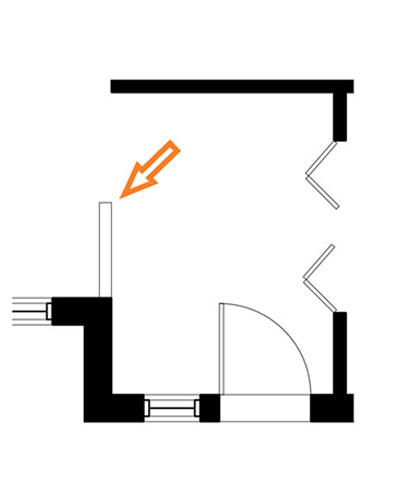
Walls not reaching the ceiling
Some partitions inside the business firm tin can be at half their tiptop.
They are represented with the aforementioned thickness as walls, just they aren't filled with black because they are non cut through.
Structural elements
A few structural elements can exist seen in the flooring plan, such equally begetting walls, columns, and beams.
They should be aligned with one another considering the structural elements of a building are positioned following the horizontal and vertical axis.
The columns are represented the same mode as walls (poached in black), and the beams similar archways if they are visible. (columns and beams together create archways).
Stairs
Stairs are one of the well-nigh difficult elements to correspond considering it tin easily get confusing for the people looking at the floorplan to understand their direction.
In a floor programme, the parts of the stairs and the dimensions we are able to see are the width of the stairway, the landing, and the thread.
The risers are shown in dashed lines, whereas the threads are in ordinary lines. The handrail is also oftentimes shown with two lines at two" from each other.
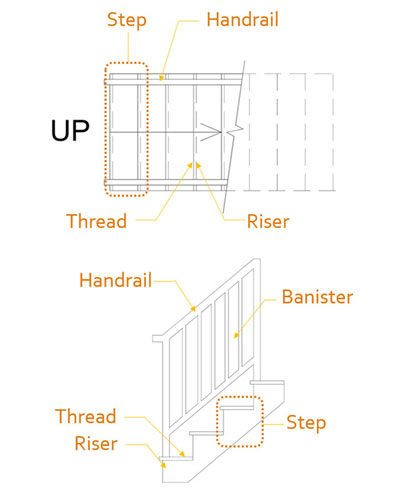
Vocabulary
This is the vocabulary used to design parts of the stair:
- Step
- Handrail
- Thread
- Riser
- Banister
Types of stairways
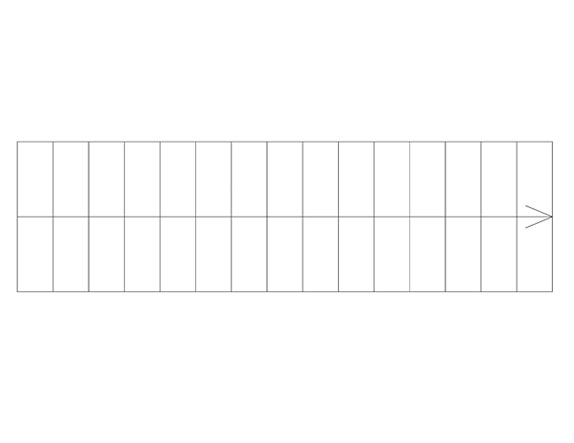
Direct stair
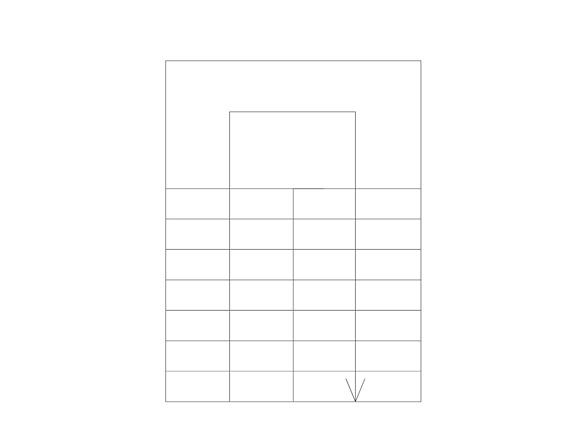
U-Shaped stair
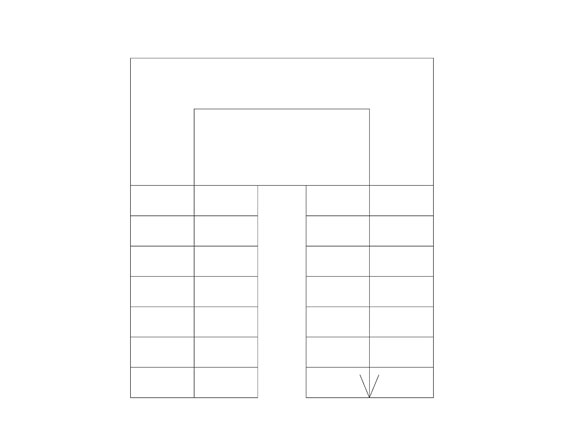
U-Shaped stair
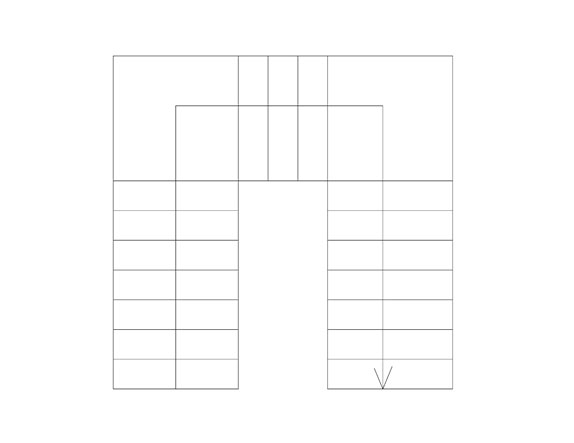
U-Shaped stair
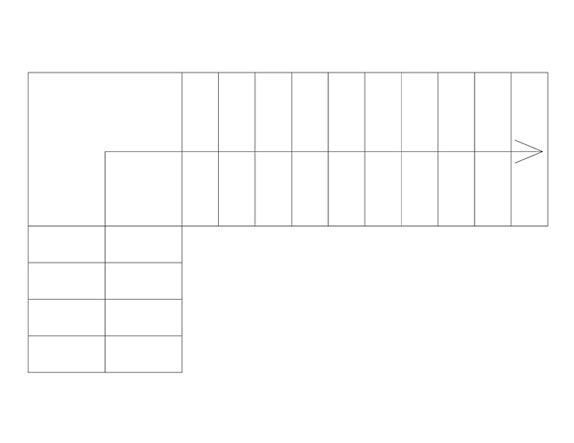
Fifty-Shaped stair
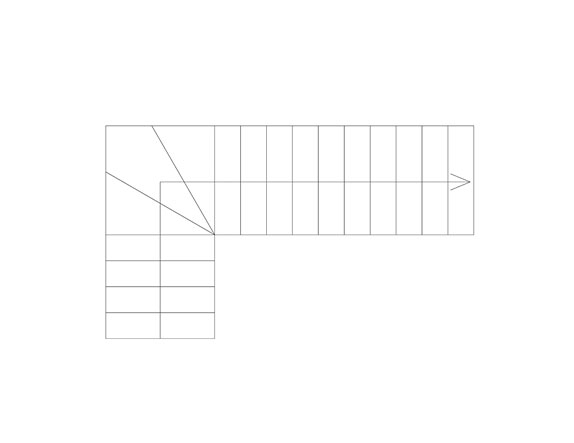
Athwart steps can either exist at thirty or 45 degrees
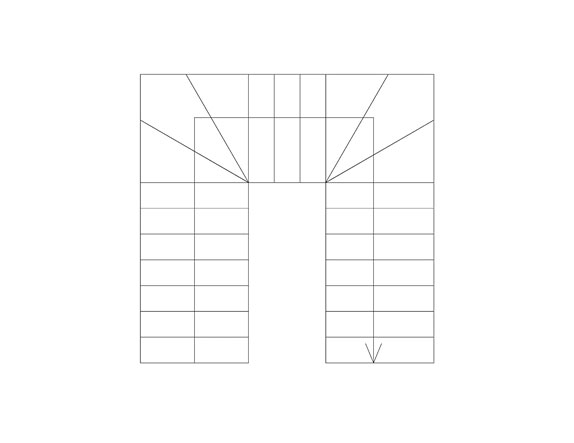
U-Shaped and Winder stair
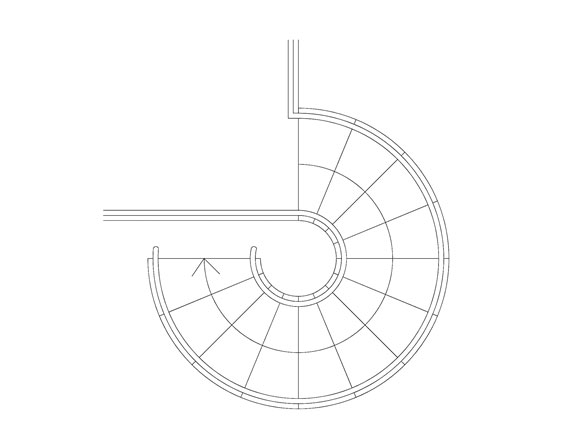
Spiral stair
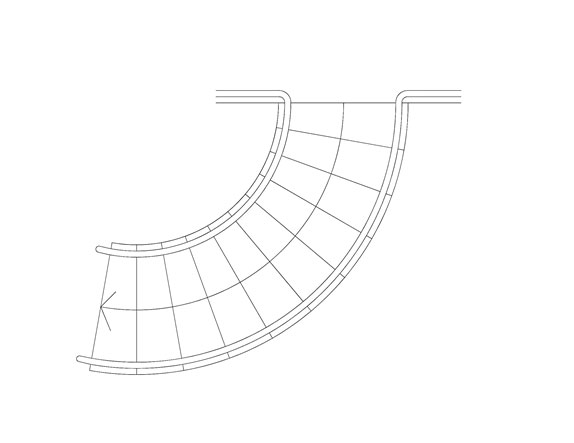
Helical stair
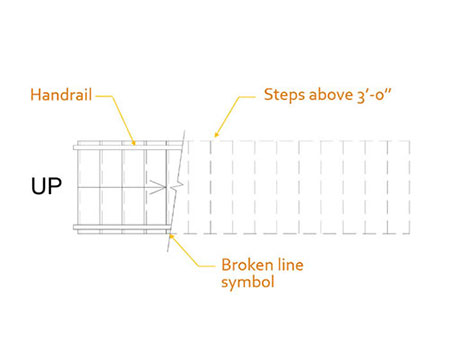
Stairs Upwardly
Because the floorplan is cut at four feet, not all the steps are seen the same.
The steps beneath 4 anxiety are represented with a continuous line.
The steps to a higher place 4 feet are represented with a dashed line.
The place where the four feet cutting is made is represented with a broken line symbol. Usually, we ever make the cut after 4-5 steps.
To betoken the direction of the stairway, we must write Upward at the showtime of the stairs. An arrow starts at the bottom of the stairs and goes up until the broken line symbol.
The handrail is normally represented only upward to the broken line symbol.
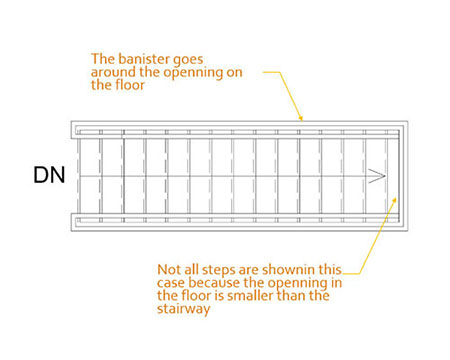
Stairs Downwards
Stairs going down are seen from to a higher place, so all the steps are in continuous lines.
To indicate the direction of the stairway, we have to write DN at the beginning of the stairs. An pointer follows the management downwardly to the last visible stride.
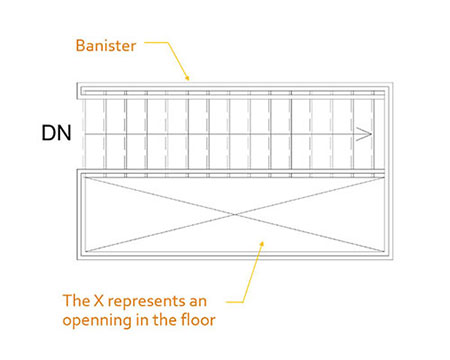
Opening in the flooring
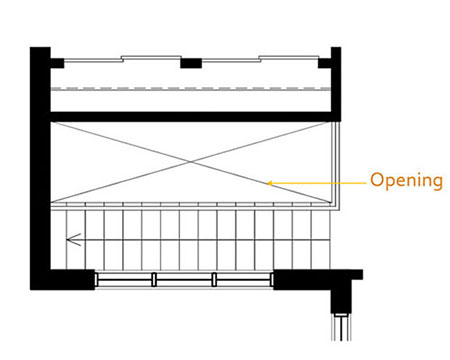
Sometimes nosotros have an opening in the floor. We will draw an X to show this opening.
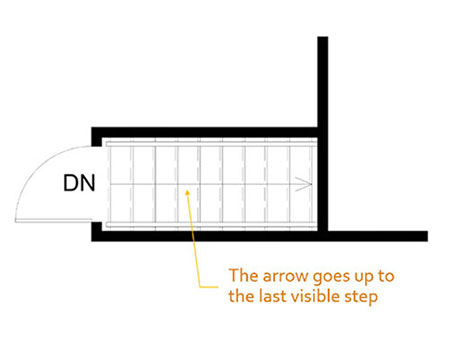
Stairs Downwards
Only the steps visible through the opening of the floor are shown. We will not draw the steps that are hidden.
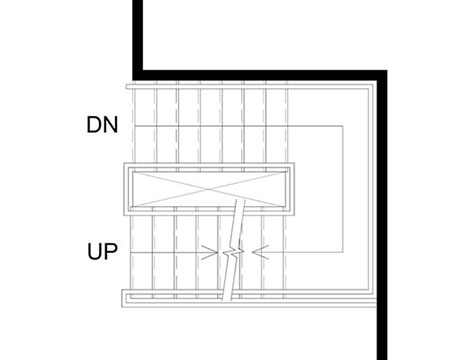
Stairs Up and Downward Combined
Sometimes, stairs going up and stairs going downward are overlapped.
The stairs going up are represented the same way, just we make them stop at the cleaved line symbol.
The stairs going down are also the same way, except they stop where the stairs upwards begin. Likewise, we need to put some other broken line for them to indicate that they proceed further.
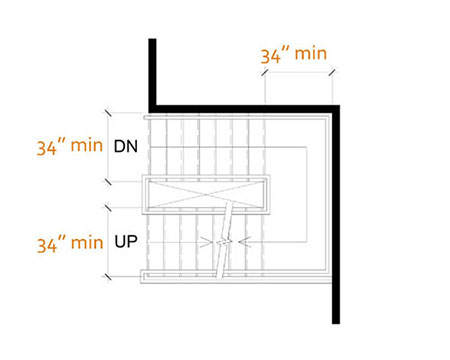
Standard Sizes (CCQ 2010)
Landing: Needs to be at least the width of the threads
Thread: min 34" width
2" minimum between the wall and the handrail
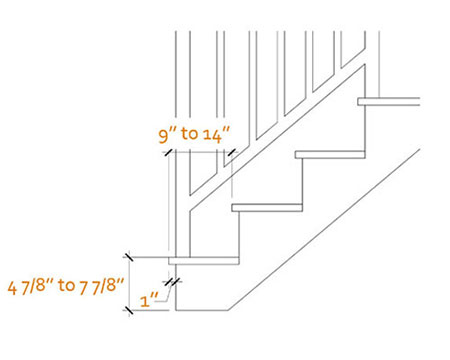
Standard Sizes (CCQ 2010)
Riser: max 7 seven/8" and min 4 seven/viii".
Nosing: maximum 1"
Annotation that not all stairs encounter those standards. Older staircases might non exist up to norms.
Doors
Standard Sizes - Interior Doors
The interior doors should be more often than not the same size. Commonly, in that location aren't more than than 2-iii different sizes in the same firm.

Mostly for bathrooms and storage
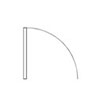
Mostly for bathrooms and storage

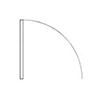
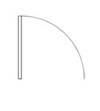
Interior door size 32"
Standard Sizes - Exterior Doors
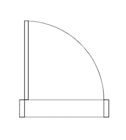
Exterior door size 32"
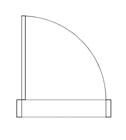
Exterior door size 34"
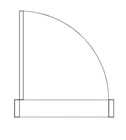
Exterior door size 36"
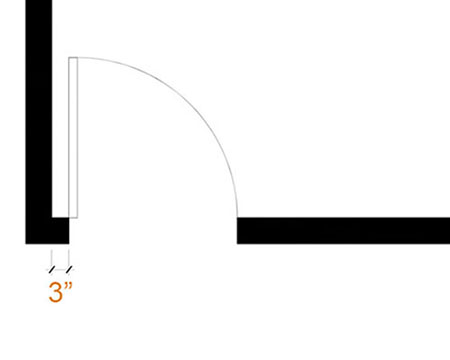
Minimum Gap
The minimum gap betwixt the opening of the door and an next partition is 3".
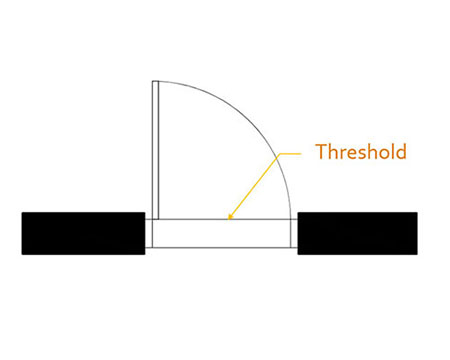
Outside Door Threshold
The threshold is a fiddling 'footstep' at the bottom of a door. Exterior doors accept one merely almost interior doors don't.
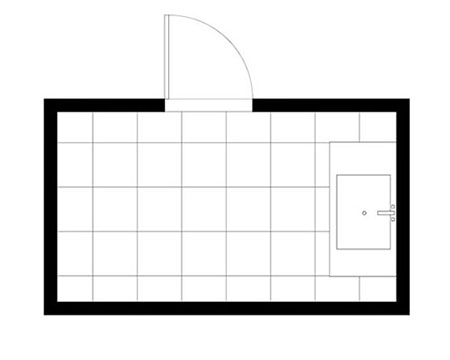
Interior Door Threshold
A door too has a threshold when there is a modify of floor covering. Ex. : wooden flooring to ceramic floor.
However, if there isn't any floor roofing represented in the floorplan, it is not necessary to represent the threshold of those doors.
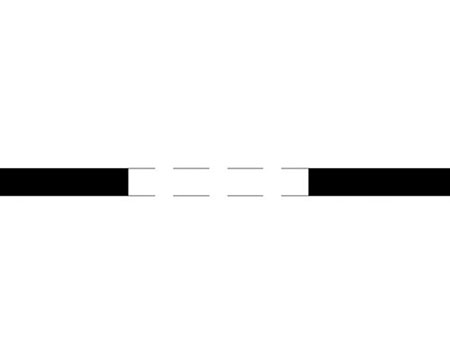
Archway
An archway can exist of any dimension. Sometimes, they are the width of a door only they can also be a lot wider. The dashed lines represent the wall in a higher place the archway.
Windows
General Graphic Representation
This is the graphic representation of a unmarried and a double window at the medium detail level. Information technology is normally used because it shows the mullions and the frame.
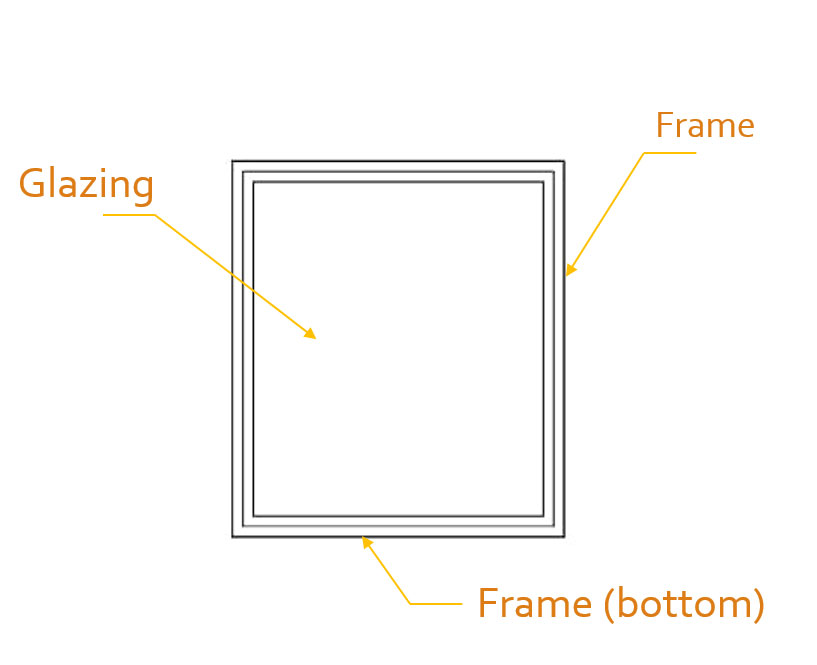
Unmarried Window - Acme View
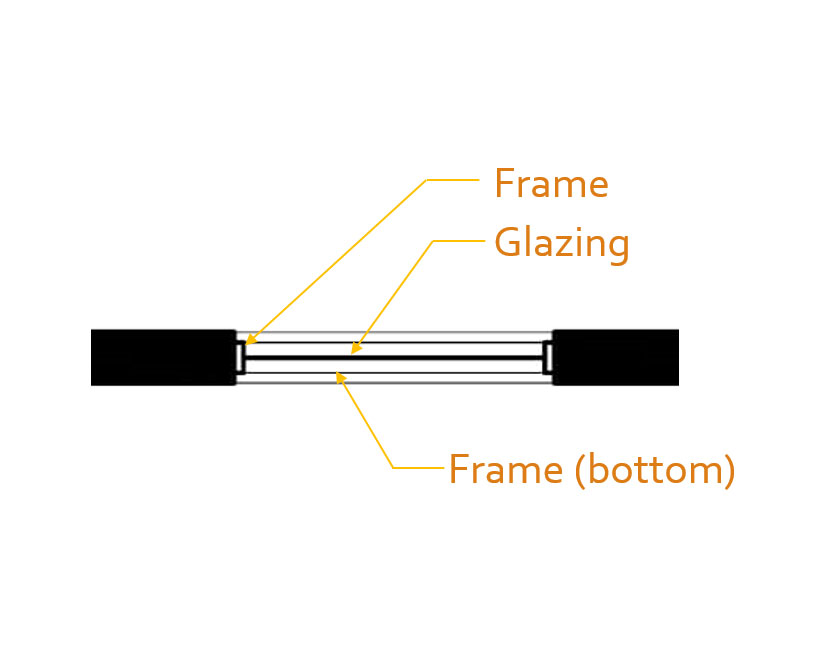
Unmarried Window - Programme View
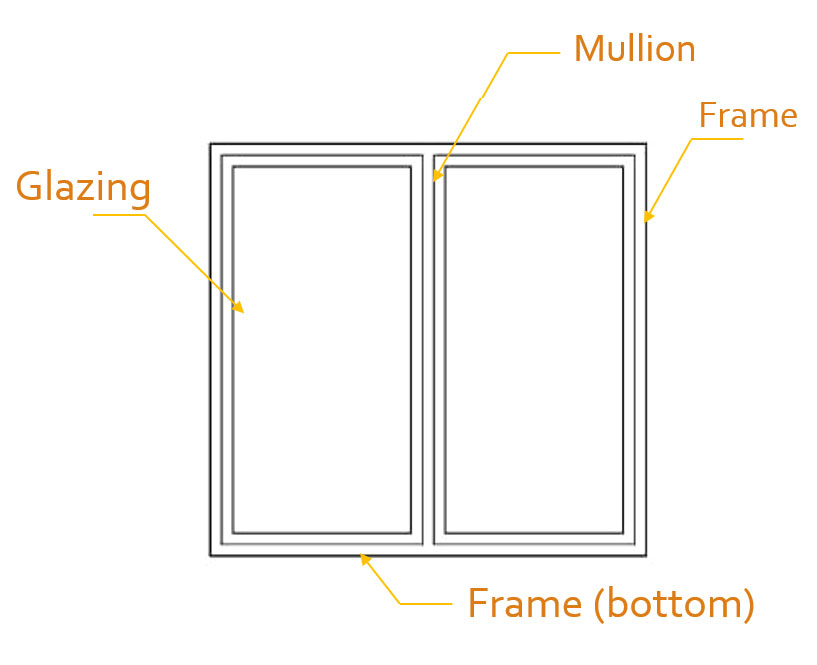
Double Window - Height View
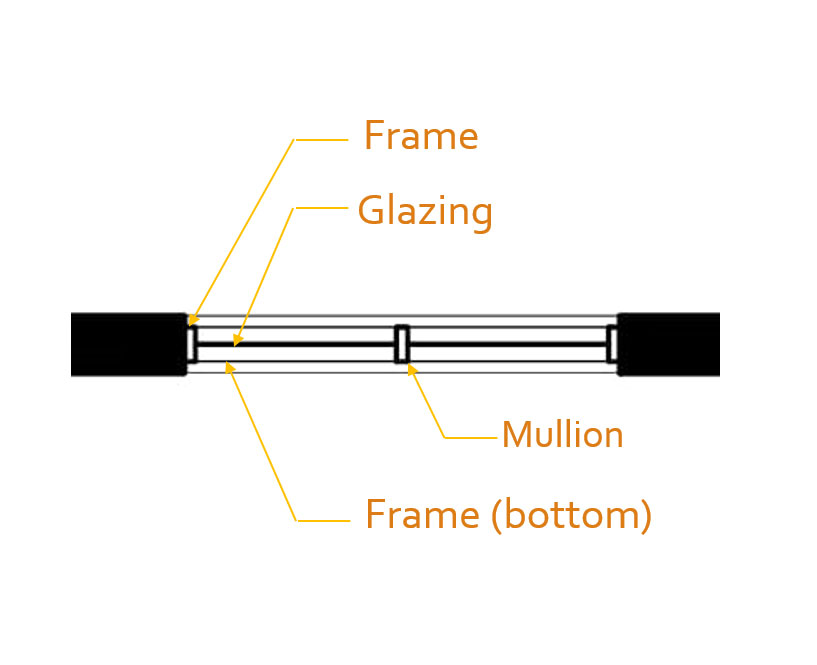
Double Window - Plan View

Mantle Wall
A curtain wall is a type of wall system used in commercial or institutional buildings in larger-scale projects.
It is made of a thin metal frame containing glass and lightweight sliding panels.
Curtain walls are not used in houses. Walls in residential buildings that are completely made of glass are walls of windows, which are not represented the aforementioned way.
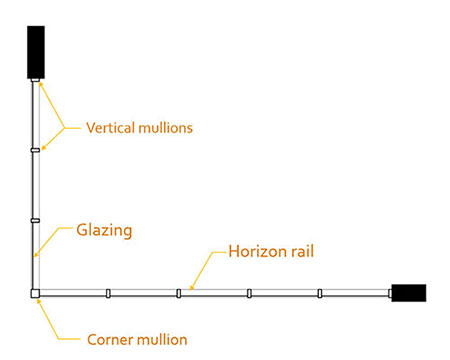
Drapery Wall - Programme View
The graphic representation looks a lot like a window. However, information technology is thinner and isn't inside a wall, because a curtain wall has its own wall system.
Too, the glazing isn't centered in the frame, it is unremarkably closer to the exterior.
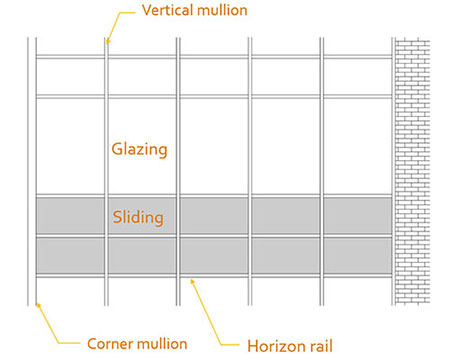
Drapery Wall - Elevation View
The thickness varies a lot from a pall wall to some other, merely we frequently run into mullions between three ½" to 7 ½" thick.
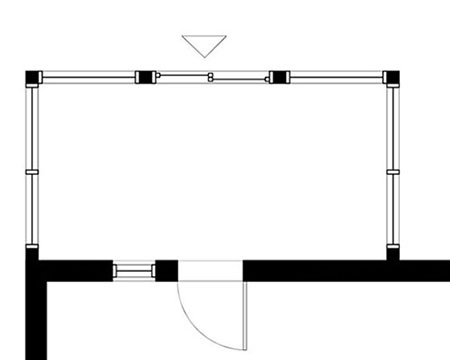
Conservatory
Solariums are ever represented in floor plans.
Sometimes, the wall volition be thinner for this part of the firm, because they are non always insulated. It tin exist windows in a wall or just windows with structural elements. To draw them, it is exactly like putting windows in a wall.
Room Identification and Dimensions
Identification
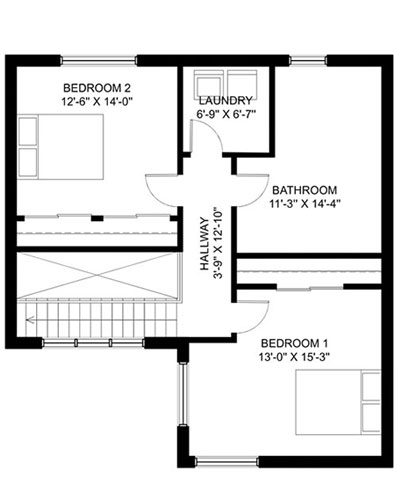
All the rooms are usually identified with their dimensions, except closets and small storage spaces. Hallway and other circulating areas are besides identified. Sometimes, it can be purposeful to identify the deck or the porch if at that place is a lot of exterior living space.
In that location isn't a conventional way to proper noun the rooms, every bit long as it is logical and easily understandable.
If there is not enough space to write the complete name of the room, we can use abbreviations. For example, WASHROOM often becomes WC or Bathroom merely BATH. Just brand sure to write it the same mode in all the plans of the same firm and then information technology is easily understandable.
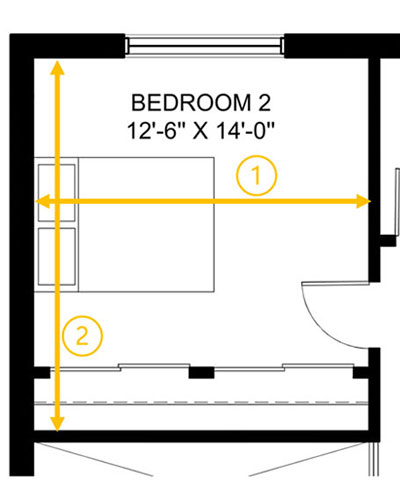
Dimensions
We always beginning with the horizontal dimension and then the vertical one.
Dimensions - Closet
When there is a closet in a room, we often include it in the dimensions. However, walk-in usually has its own identification and dimensions.
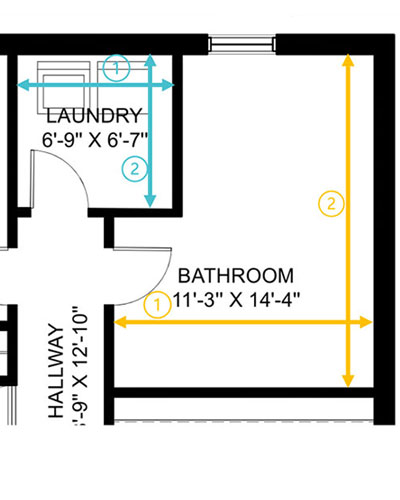
Dimensions - Shape of Room
If the room doesn't take a foursquare or rectangular shape, nosotros take the dimension that is the most representative of the space. The dimensions are approximative, so it doesn't matter if the dimension is non entirely accurate.
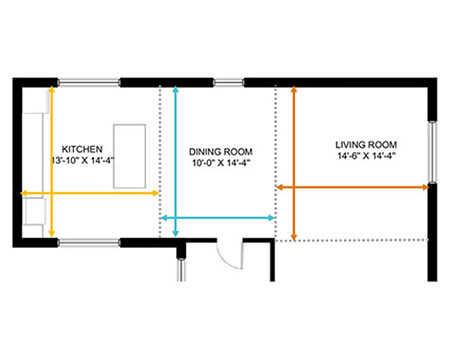
Dimensions - Open up Surface area
When information technology is an open surface area and in that location is no separation between the rooms, we need to create imaginary separations by guessing where the room ends. After, we take the dimensions as usual.
Graphic Standards
There are a few dimensions that should be the same in most houses.
Hallways or any other circulating area are at to the lowest degree 3'-0" wide.
A closet is usually 2'-0" wide minimum.
Countertops are a minimum of 24".
Entrances
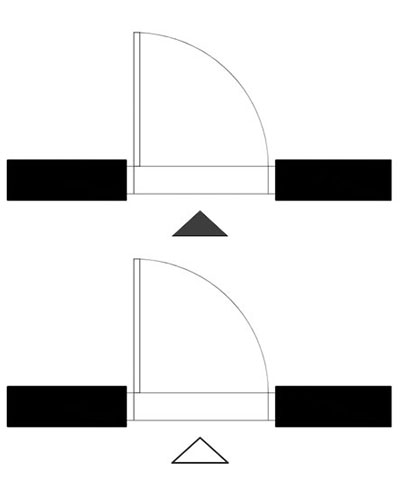
It is common to put pocket-size triangles in forepart of the entrances of a building to make them easier to notice in the floorplan. A blackness-filled triangle frequently represents the main entrance and a hollow triangle represents secondary entrances.
Closet
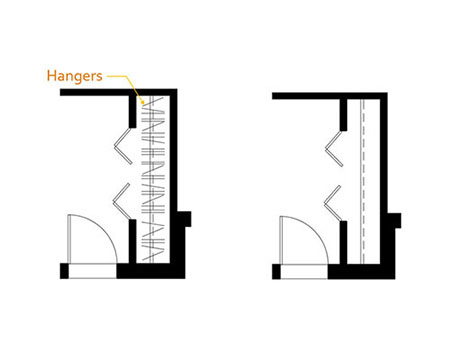
The inside of a cupboard is represented with a thin line and a dashed line (the pole and the shelf). Hangers are also fatigued optionally.
Opening in the floor
Openings in the floor of a plan are represented with an "X" in thin lines.
Source: https://www.tourbuzz.com/floor_plan_knowledge_base

Enregistrer un commentaire for "How to Draw 34 Door on Floor Plans"